TRATEZ
Your free gift

Itch Relief Playbook

10 at home fixes most dog parents have never heard of, to cut the scratching, licking and biting

Hi, I'm Mo.

Watching a dog scratch at 2 a.m. breaks my heart, and I know how helpless it feels.

Here is what most people miss: a lot of what makes a dog itch is sitting in the house. The air, the bed, the floor, the stuff that rides in on four paws. None of it needs a trip to the store. Here are the 10 changes I would make first, starting with the one you can do tonight.

Your friend, Mo

Download the PDF

Part 1. The lick loop

1

Give the urge somewhere else to go

When you see your dog start, interrupt calmly and hand them a frozen Kong or a lick mat (freeze it for 2 hours or overnight so it lasts), or a chew. Build in a sniff walk or a puzzle feeder each day.

Licking is self soothing. Itch, boredom and stress all feed the same loop, and the licking then irritates the skin, which makes it itch more. Never scold; it adds stress and pushes the licking to when you are not watching. A tired dog licks less.

If your dog is fixated on one spot, this is the moment for the Anti Itch Spray. Two or three pumps hydrate the skin they keep going back to, and that takes the pull out of it.

When At your dog's usual itchy times, often evenings and right before bed.
Part 2. What comes in the door

2

Set up a door station

Hang a soft cloth by the door you use for walks. When you come in, wipe the paws and between the toes, the legs, the belly and the muzzle with a damp (not soaking) cloth and plain water, then dry.

Pollen, grass and street residue ride home on the dog and end up on the couch, the bed and inside the licking. In winter the same wipe takes off salt and de icer, which burn pads and upset the stomach when licked. If a lawn has been treated, follow the product label on when it is safe for pets.

When After every walk, spring through fall, and every winter walk on salted sidewalks.

3

Time your walks around the pollen, not the clock

Check a pollen forecast app and walk in the low window. The best time of all is right after rain. Keep your dog inside while anyone is mowing, skip tall or freshly cut grass, and shut the windows on windy, dry days.

Pollen counts swing by hour, weather and season, and the "walk early" advice you have heard is not reliable. One more: in pollen season, dry your laundry and your dog's bedding indoors. A clothesline is a pollen trap.

When Every day in your dog's itchy season.

4

Brush daily in season, and towel dry every time they get wet

A daily brush in pollen season. After rain, a swim or a rinse, towel dry all the way, especially between the toes, in skin folds and under a thick coat. Check that two fingers slide under the collar, and wash it when it gets wet or dirty.

Brushing lifts the pollen sitting in the coat before it reaches the skin. Trapped moisture feeds bacteria and yeast, and that is how a hot spot starts, usually in warm, humid weather. A damp, dirty collar rubs and does the same thing at the neck.

When Brush daily in pollen season. Dry every single time they get wet.

Part 3. The bed and the floor

5

Hot wash the bed every week, then air it out

Wash the bed cover and any stuffed toys weekly in hot water, 130 F (54 C) or hotter if the care tag allows, and dry on high heat. Between washes, leave the bed in direct sun or hard cold for about 12 hours.

Dust mites and their droppings are one of the biggest triggers for allergic dogs, and a dog bed is their favourite address. Hot water kills them, and sun or cold dries them out. Replace the bed itself every 6 months or so.

When Every week. Same day as your own sheets.

6

Go unscented, everywhere your dog touches

Switch bedding and blankets to a fragrance free, dye free detergent and run an extra rinse. Move plug ins and candles out of the room with the dog bed. After mopping, let the floor dry fully before your dog walks on it.

Scented products leave a film on fabric and floors that your dog lies on for hours and then licks off their paws. Never leave a wet cleaning product where a tongue can reach it.

When Next laundry day, then keep it going.

Part 4. The air your dog breathes

7

Keep the air between 30 and 50 percent humidity

Put a humidity gauge (about ten dollars) in the room where your dog sleeps. Under 30, add a humidifier. Over 50, a dehumidifier.

Winter heating and summer air conditioning both dry the air, and dry air pulls moisture out of skin until it is tight and flaky. Go too far the other way and dust mites and mold thrive.

When Check it in the first week of heating season and the first humid week of summer.

8

Vacuum with a HEPA filter, or you are making it worse

Check the vacuum you own for a sealed HEPA filter. Hit the rooms your dog uses most and the spot under their bed.

A vacuum without one pulls fine dust and dust mite debris out of the carpet and blows it straight back into the air, right where your dog is lying.

When Weekly, more in shedding season.

9

Put a plain HEPA purifier where your dog sleeps

Not the living room. The spot your dog spends 12 hours a day. Size it to the room (length times width in feet, compare to the box) and run it on a higher fan speed.

HEPA traps the fine particles that settle on skin and coat. Skip anything sold as an ionizer, plasma or ozone cleaner; those can release ozone, which irritates the lungs, and your dog breathes closer to the floor than you do.

When Running all night, every night.

10

Change the furnace filter, and go one grade up

Pull the filter out today. If it is grey, replace it, and buy the next one a grade higher: a pleated filter rated MERV 11 to 13 if your system allows it.

A dog adds hair, dander and tracked in pollen, so filters clog faster in a dog home, and a clogged filter stops cleaning the air. The higher rating catches the fine dust and dander the cheap blue ones let through. If the vents start whistling, your system wants a lower grade; an HVAC tech can check in minutes.

When A standard 1 inch filter every 30 to 60 days. Check it monthly in pollen season.

Call your vet if you see

Open sores, scabs or pus filled bumps. A strong smell from the skin or ears. Bald patches, or skin turning dark and thick. Repeat ear infections. Rust coloured stains on the paws, which mean heavy licking even if you never catch it. Itching that carries on after a flea comb check comes up clean, or that has become year round. Itchy skin very rarely goes away on its own, and these are the signs it needs more than home fixes.

How the chews and the spray fit

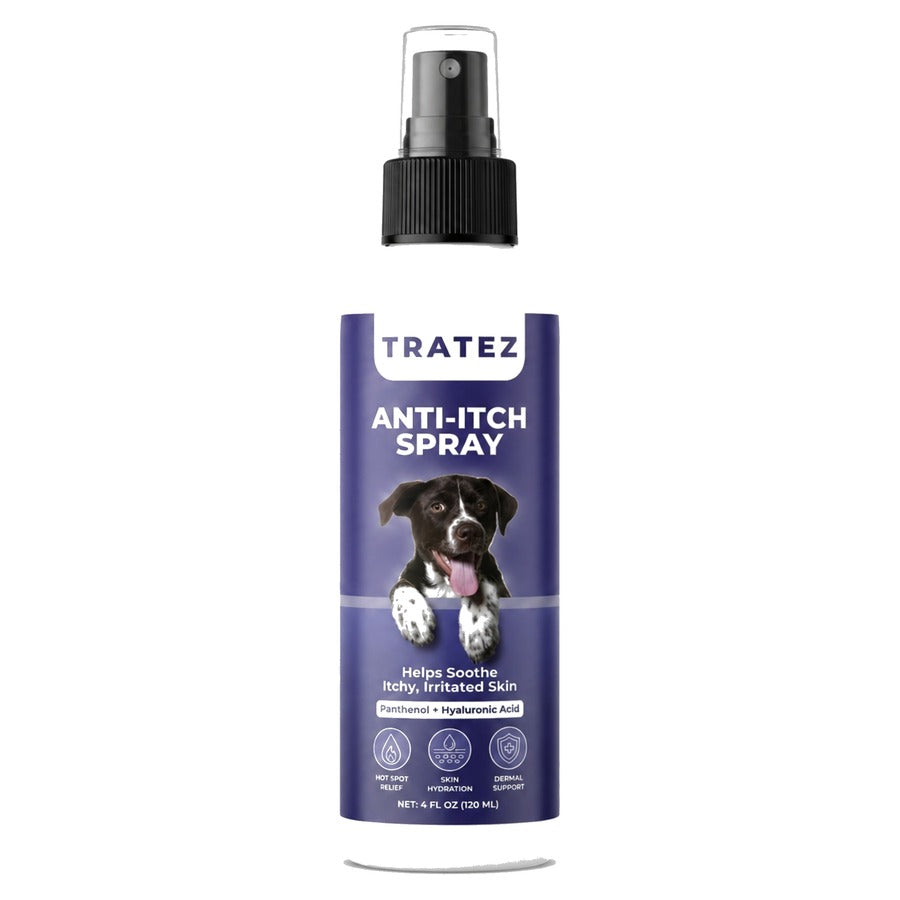
Tratez Anti Itch Spray

The spray is for the moment

Panthenol and hyaluronic acid.

No steroids, no lidocaine, no alcohol, no fragrance.

Two or three pumps on the spot your dog keeps going back to.

It hydrates the skin and calms the urge, so the skin gets left alone.

Lick safe. Will not stain a light coat.

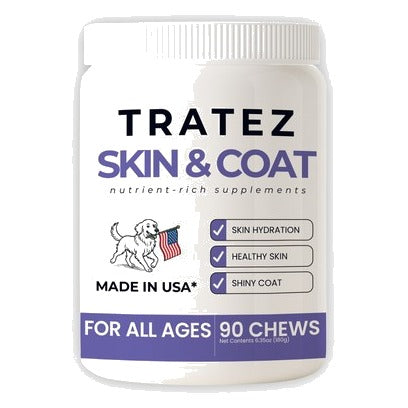
Tratez Skin & Coat Chews

The chews are for the fix

Omega 3, 6 and 9 plus vitamin E.

They rebuild the skin barrier from the inside, which is what the scratching is really about.

Most dog parents notice less scratching in the first few weeks.

The full result builds over 1 to 3 months of daily chews, so stick with it.

Your Anti Itch Spray came free in your box. Keep it at the door station, next to the damp cloth.

Download the PDF

This playbook is general information for dog parents and is not veterinary advice. Results vary from dog to dog. Statements about TRATEZ products have not been evaluated by the Food and Drug Administration, and our products are not intended to diagnose, treat, cure or prevent any disease. Talk to your vet about persistent itching, infections or diagnosed conditions, and before changing your dog's routine, diet or supplements.